
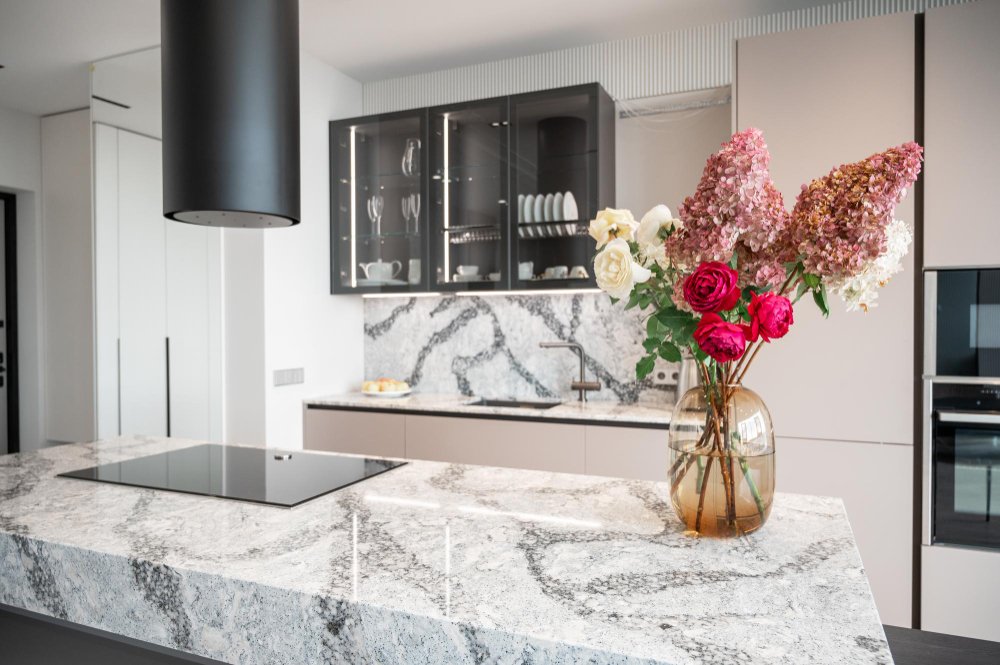
When it comes to creating a kitchen that balances performance and style, the choice of countertop material plays a defining role. Homeowners often compare ultra compact countertops vs quartz to decide which surface offers the best combination of beauty, durability, and value. Both are premium materials designed for modern living — but they differ in composition, maintenance, and long-term performance. Understanding their unique advantages helps you make the right decision for your home.
1. The Composition: What Are They Made Of?
Quartz countertops are engineered using about 90–95% natural quartz crystals blended with resins and pigments. The result is a strong, non-porous surface with consistent color and pattern.
Ultra compact surfaces — often known by brands like Dekton — are created through an advanced process that fuses raw materials found in glass, porcelain, and quartz under extreme heat and pressure. This produces an incredibly dense and durable material that mimics the natural formation of stone in a matter of hours.
2. Durability and Resistance
When it comes to strength, ultra compact countertops take the lead. They are highly resistant to scratching, UV exposure, and heat — making them suitable for both indoor and outdoor kitchens. Quartz, while durable, can discolor under direct sunlight and may not handle extreme heat as well. However, quartz remains an excellent choice for interior spaces where consistency and polish are priorities.
3. Aesthetic Appeal
Both materials offer stunning visual appeal. Quartz provides a uniform, refined look that complements contemporary interiors. It’s available in endless colors and patterns, including marble-like veining.
Ultra compact surfaces, on the other hand, replicate natural materials such as stone, concrete, or metal with extraordinary realism. Their matte or textured finishes create depth and sophistication, ideal for homeowners who favor a more architectural aesthetic.
4. Maintenance and Care
Both materials are low-maintenance, but with slight differences. Quartz requires minimal upkeep and is resistant to stains due to its non-porous nature. Ultra compact countertops share these advantages but go a step further — their dense composition resists etching, chemicals, and even scorching. Regular cleaning with mild soap and water is enough to keep either surface pristine.
5. Installation and Customization
Both materials require professional fabrication and installation due to their density and precision cutting requirements. Ultra compact surfaces can be installed in ultra-thin profiles (as slim as 8mm) for a sleek, modern appearance. Quartz is slightly more flexible during fabrication, allowing for more edge and design customization. The best choice depends on whether your design prioritizes minimalism or decorative versatility.
6. Cost and Value
Quartz remains slightly more affordable than ultra compact materials, though both fall within the premium range. Ultra compact surfaces, however, often offer greater longevity and versatility for both indoor and outdoor use. Homeowners seeking long-term performance and design flexibility may find the investment worthwhile.
7. Sustainability and Eco-Friendliness
Ultra compact countertops are produced using sustainable technologies that minimize waste and emissions. Their longevity also reduces replacement frequency, making them an environmentally sound choice. Many quartz manufacturers now incorporate recycled content, giving both materials a strong standing in eco-conscious design.
8. Performance in Real Life
In busy family homes or open-concept kitchens, ultra compact countertops excel in resilience and easy cleaning. They are nearly impervious to stains, scratches, and sunlight — ideal for active households. Quartz, on the other hand, remains the go-to for those who value consistent beauty, elegant finishes, and a wide range of color options. The choice ultimately depends on lifestyle and design priorities.
9. Pairing with Cabinetry and Lighting
Both materials harmonize beautifully with modern cabinetry. Quartz pairs well with soft, warm tones and minimalist designs. Ultra compact surfaces complement bold contrasts, metallic hardware, and industrial-style lighting. Each can become the visual centerpiece of a kitchen when paired thoughtfully with texture and color.
10. The Verdict: Which Is Best?
There’s no single winner — it depends on your goals.
If you want an ultra-modern, heat-resistant surface with a natural aesthetic, ultra compact countertops are your match.
If you prefer a refined, customizable look with reliable indoor performance, quartz is the ideal choice.
Both offer lasting value and exceptional beauty, ensuring that whichever you choose, your kitchen becomes a space defined by strength, sophistication, and style.
Conclusion: The Modern Countertop Revolution
When comparing modern countertop materials, both ultra compact and quartz surfaces represent the evolution of design and durability. They embody the future of kitchen surfaces — sleek, sustainable, and strong. The best choice isn’t about better or worse; it’s about finding the surface that reflects your lifestyle, your taste, and the way you live every day.